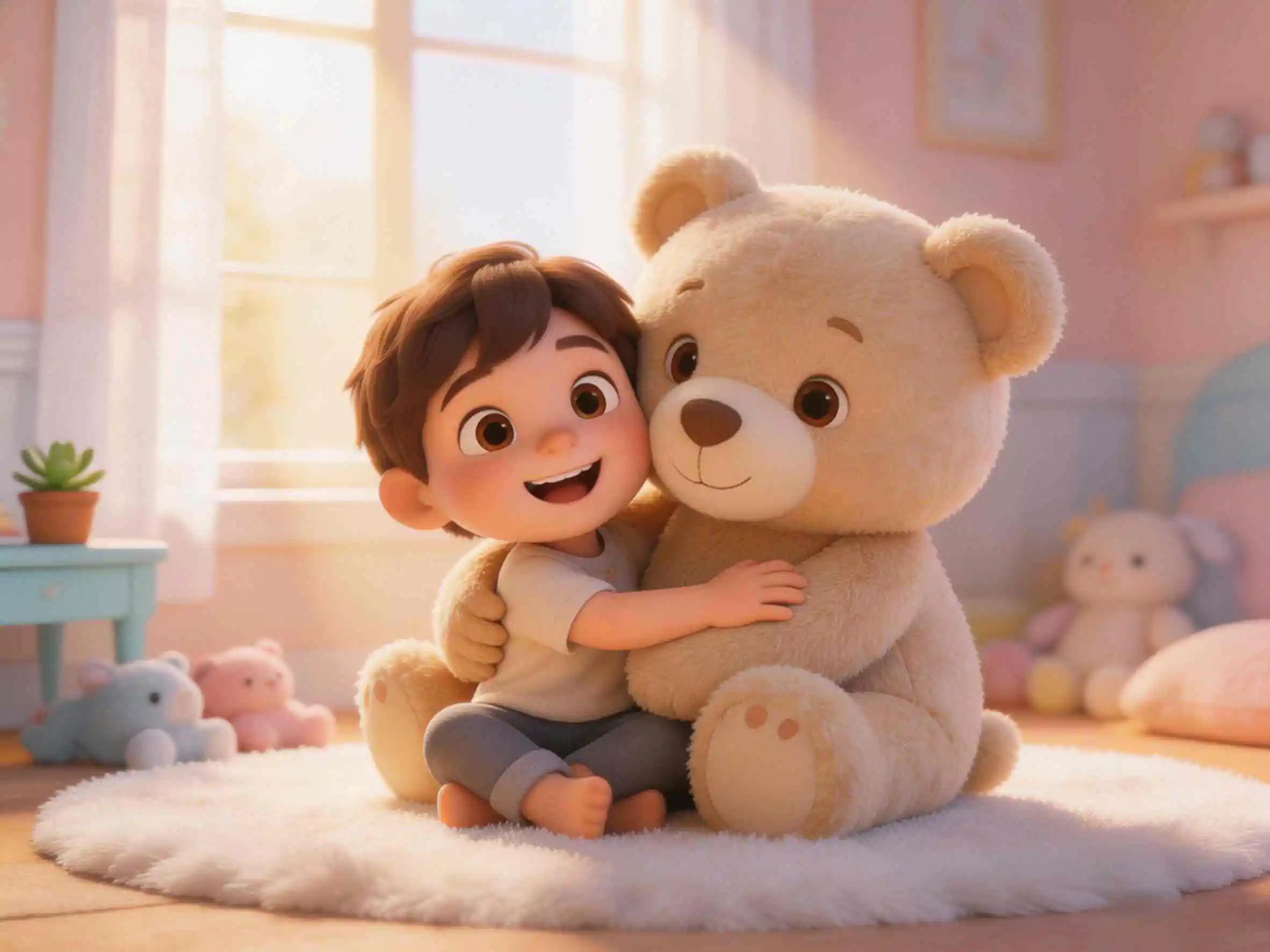
Every child loses something — a race, a game, a spot on the team — long before they learn what to do with that feeling. That is exactly where The Hare and Tortoise Story earns its place on the shelf: everyone knows who won, but nobody tells children what happened to the hare *after*. Retold well, the tortoise and the hare folk tale becomes a masterclass in social emotional learning — losing, breathing, and trying again. Our latest episode, The Hare Who Learned to Lose, shows the result — a scared hare hides her running shoes, learns three magic words from Grandpa Tortoise, and the whole episode ships as a finished kids' video instead of a lesson-plan to-do list.
KiVi AI turns a graded folk tales script straight into synchronized, multi-speaker animation — no voice actors, no manual keyframing, no extra audio editing. From the hare and tortoise story to honesty and friendship tales, one workspace covers the full pipeline: script the folk tales, sync natural voiceovers, keep characters consistent across episodes, and publish fast enough to grow a kids' channel.
Why the Hare & Tortoise Story Is Perfect for Emotional Learning
Parents searching for The Hare and Tortoise Story usually want the classic race. But the race ends in four lines — the real teaching space is everything around it. The tortoise and the hare folk tale is one of the few classic tales where losing is the engine of the plot, which makes it the ideal vehicle for social emotional learning: a well-structured retelling places the feeling — embarrassment, fear of trying again — inside a moment every child recognizes, then models the recovery instead of lecturing about it. Pair expressive cartoon visuals with clear, evenly paced dialogue and children absorb the habit instead of a slogan to forget.
- Start after the loss, not during the race: The episode opens on the storybook page stained with carrot juice and a hare who whispers "can we skip that one?" — a feeling every child who has ever lost knows instantly.
- The method delivered as a chant, not a lecture: Grandpa Tortoise's three magic words — "Pause! Breathe! Try again!" — repeated three times with matching actions: freeze, deep breath through the nose, get back up.
- Natural cause and effect: The consequence appears inside the story rather than in a warning: the hare who hides her shoes loses the thing she loved. Then the payoff: she falls mid-race, uses the chant, and finishes — smiling.
- A brave ending that reframes winning: The tortoise wins again — by one slow step — and gives his medal to the hare: "For the bravest loser in Oakvale." Children learn that finishing is its own victory.
Episode 2 of the Barnaby's Oakvale Tales series — classic English fairy tales retold every week. Subscribe to follow along.
Create a Folk Tales AnimationWhat the AI Dialogue Generator Solves: Four Pain Points
Producing a clear, well-paced story between animated characters has historically meant coordinating voice talent and spending hours on manual lip-syncing — costs that push most solo creators and small kids' studios out of animated content entirely. With AI dialogue generator, any graded folk tales script becomes a finished animated episode in minutes. Here is what actually changes:
- Pain point 1 — voice production cost: A separate, clear voice is generated per character — a warm, sleepy narrator Barnaby, a bright and slightly pouty Miss Hare, a very slow and warm Grandpa Tortoise — with automatic phoneme-accurate lip sync, so children see correct pronunciation cues without any post-production alignment work.
- Pain point 2 — pacing that ignores young viewers: You paste your folk tales script directly, or refine the rhythm turn by turn, preserving the one-second pause after "Breathe" that children need to echo the chant out loud.
- Pain point 3 — character drift across scenes: Character IP Lock keeps Barnaby's golden glasses, Miss Hare's ears and Grandpa Tortoise's shell identical as they move from the tree study to the meadow to the finish line — the consistency problem that traditionally required frame-by-frame redraws, and the key to a recognizable series.
- Pain point 4 — one style for every audience: Render emotional learning stories as tactile claymation stop-motion or vibrant 2D preschool cartoons (browse the animation styles gallery), so the same hare-and-tortoise script can serve toddlers, ESL classrooms and family viewers.
Turning the Hare & Tortoise Story into an Emotional Learning Script (Template)
Turning folk tales for kids into an emotional learning story only works if the lines are right. Before generating anything, lock in one feeling-behavior per scene and keep every turn under about 12 words — short enough for a readable subtitle and for a child to echo out loud. This is the pattern The Hare Who Learned to Lose follows:
| Story beat | Line to lock in | Where it lands in the scene |
|---|---|---|
| The skip request (naming the feeling) | "Can we… skip that one?" — "Stories about losing we must NOT skip." | The tree study, the race picture on the page |
| The hidden shoes (the cost of fear) | "If I lose again, everyone will laugh." | Dusty red running shoes in a closet |
| The method as a chant | "Three magic words: Pause! Breathe! Try again!" | Meadow, Grandpa Tortoise raising one slow toe |
| Practicing the chant | She stumbles — breathes — and gets back up. | Practice run on the grass |
| Race day tumble (the test) | She fell — and she finished. | Cozy Hill, shoelace undone, crowd gasping |
| Passing the lesson on (the folk tales lands) | "For the bravest loser in Oakvale." — "Losing a race only loses a race." | Medal ceremony, then Barnaby closing the storybook |
Two production rules follow from the script: give each character a clearly different voice so young viewers can tell speakers apart with their eyes closed, and repeat the "Pause! Breathe! Try again!" chant at least three times per episode. Both are cheap to enforce at script stage and expensive to fix after animation.
How to Make an English Fairy Tale Video in KiVi AI
Turning that hare-and-tortoise script into a publish-ready AI 3D cartoon takes four steps, all inside the same workspace:
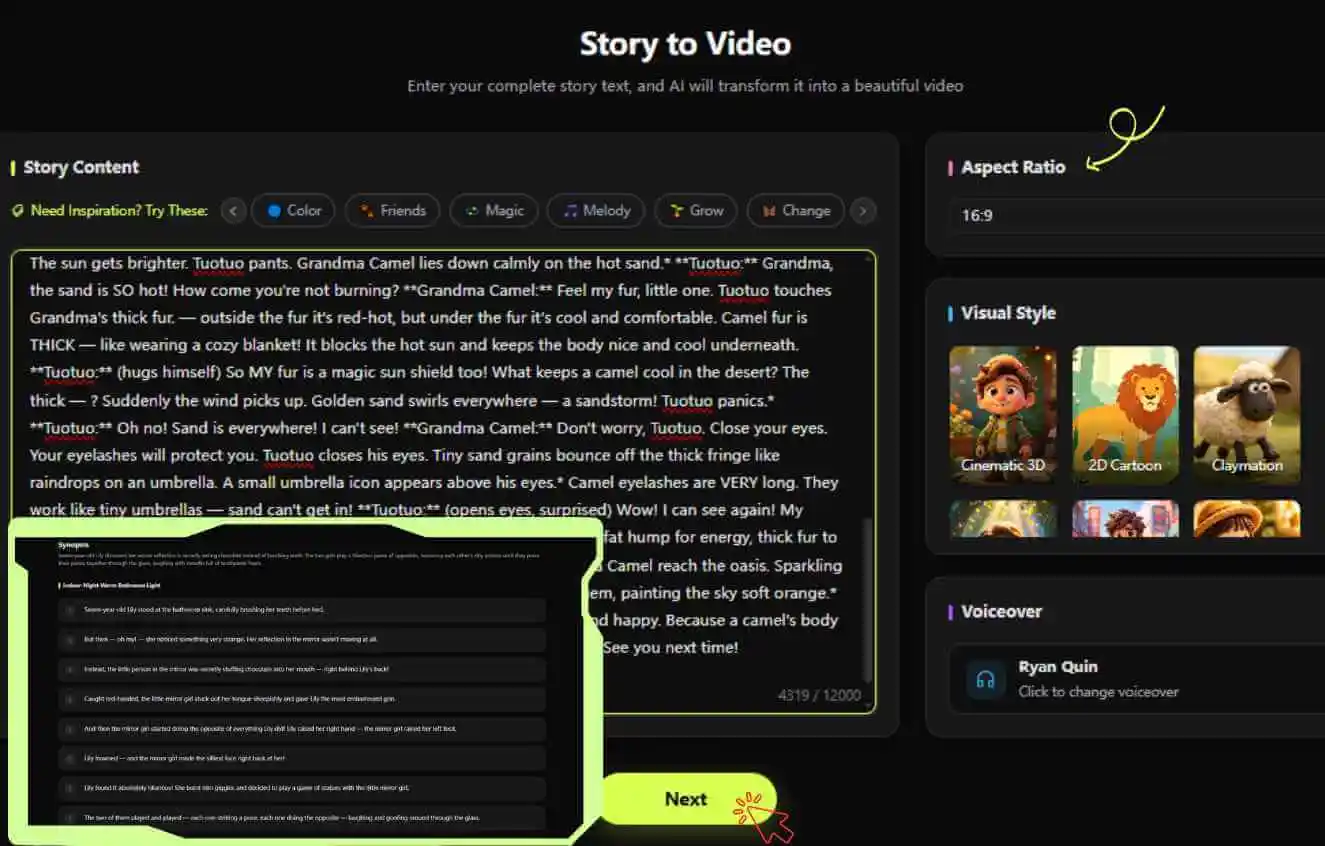
Step 1: Create Your Story
Start with your folk tale retelling — for example, "A scared hare hides her running shoes after losing, and Grandpa Tortoise teaches her three magic words for falling behind." Choose Narration or Character Dialogue, then set the video parameters: aspect ratio, language and visual style.
Step 2: Develop the Story & Dialogue Script
Let AI draft the story outline in Narration mode, or produce an editable script in Character Dialogue mode. Rewrite the lines here — vocabulary level, chant repetition, the pause after "Breathe" — before anything is rendered.
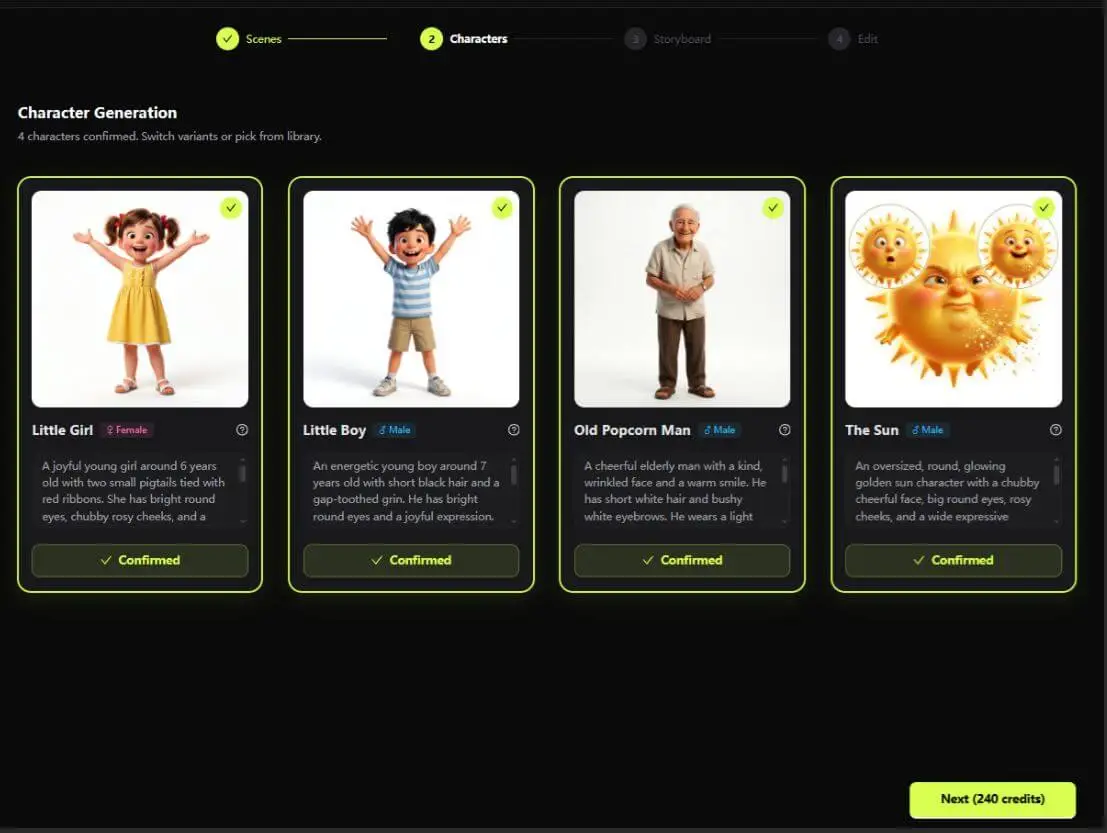
Step 3: Design Characters & Build Storyboards
Pick the AI-generated designs for Barnaby, Miss Hare and Grandpa Tortoise, assign a distinct voice to each, and turn the script into storyboards. Adjust scene prompts and lines while the character models stay locked — Barnaby's golden glasses stay golden in every episode.
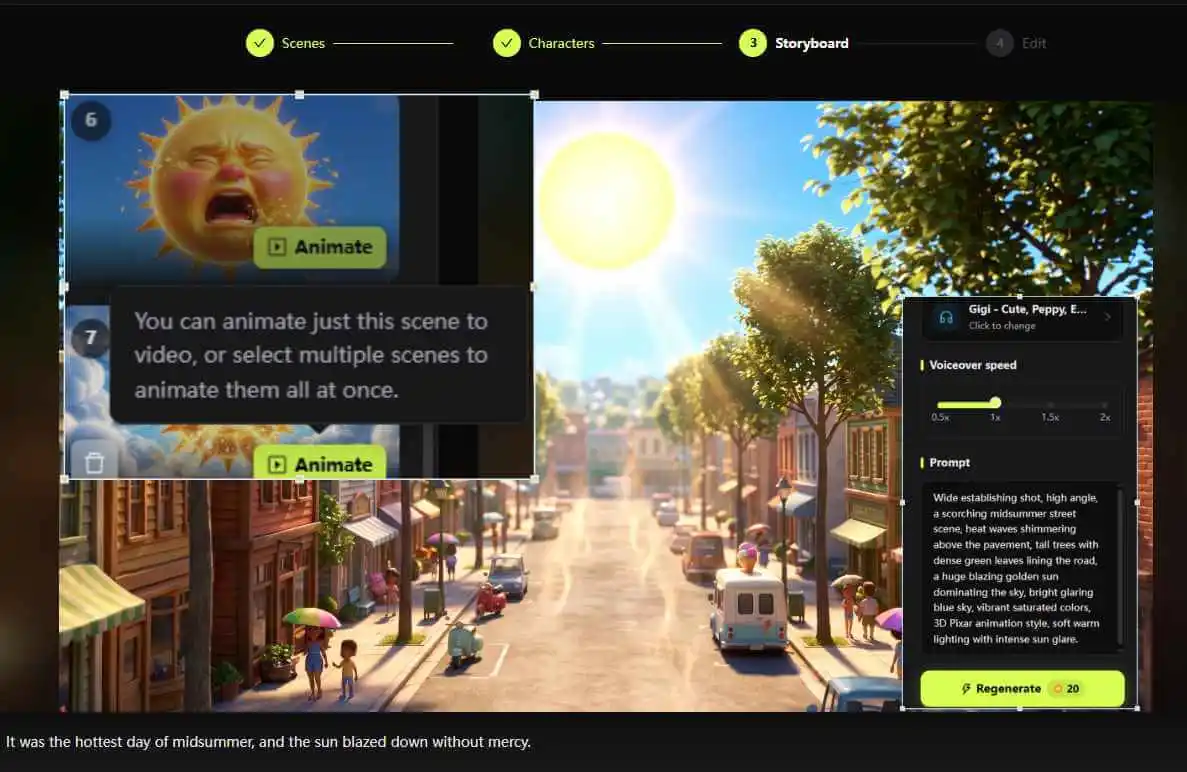
Step 4: Animate, Caption & Export
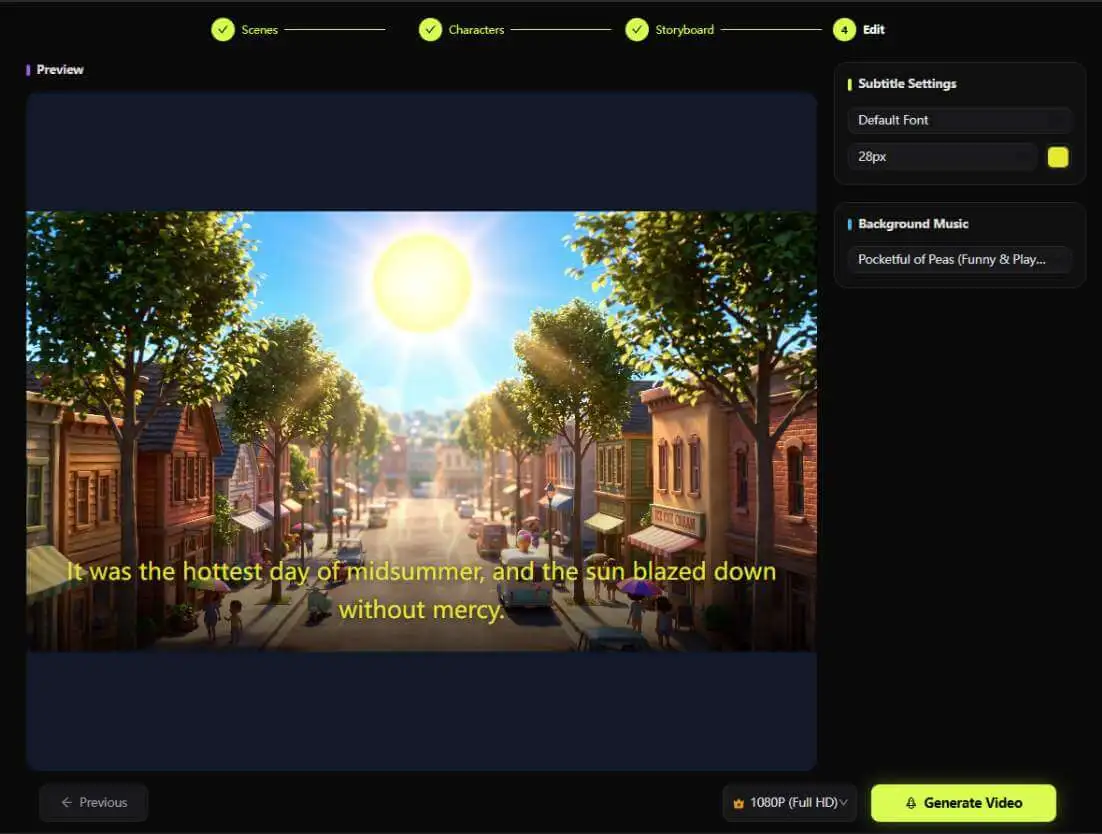
Animate the shots you keep, add subtitles and gentle music-box background music, review the lip sync on the "Pause! Breathe! Try again!" chant, then export in 16:9 for the full episode or 9:16 for a 30-second "Three Magic Words" Short.
AI Dialogue Generator vs. Traditional Kids' Animation Production
A traditional animated retelling of an English fairy tale coordinates voice talent, illustrators and video editors — and every script revision restarts part of that chain. A story-to-video workflow collapses it into a single editing surface:
| Production category | Traditional kids' animation workflow | KiVi AI dialogue generator |
|---|---|---|
| Voiceover & pronunciation | Hire several voice actors, then align mouth shapes to the audio tracks by hand. | Generates a clear voice per character with automatic phoneme-accurate lip sync. |
| Character continuity | Redrawing Barnaby's vest and Miss Hare's ears against new meadow backgrounds is slow and costly. | Character IP Lock holds Barnaby's exact appearance across every scene cut and every episode. |
| Script-level changes | Adjusting the chant wording or simplifying a sentence means re-recording audio and re-cutting scenes. | Edit any sentence in the browser and regenerate that scene within seconds. |
| Publishing frequency | A single five-minute animated folk tale retelling takes weeks to finish. | Multiple English fairy tale episodes can ship every week from the same series template. |
Building an English Fairy Tales YouTube Channel for Kids
Children follow recurring characters through familiar situations — which is exactly why a grandfather-badger-and-friends series outperforms one-off folk tale videos on retention. Pairing a structured retelling library of English fairy tales with an automated character dialogue animation pipeline makes a sustainable kids' channel realistic for a one- or two-person team:
- Build a themed episode series: Follow Barnaby's Oakvale Tales from The Hare Who Learned to Lose through The Three Little Pigs Build Smart, Maple in the Woods and Mr. Wolf's Bakery Apology — one feeling or thinking habit per episode, one chant per rule.
- Design for echo practice: Keep the "Pause! Breathe! Try again!" chant clean and evenly paced so young viewers can pause and repeat it out loud — the highest-impact social emotional learning habit for kids at this age.
- Keep visual branding consistent: Reuse the same character models, thumbnail layout and end-screen "Bedtime Ritual" card so families recognize the series before they read the title — and so every new episode costs a fraction of the first.
The compounding effect is the point: episode 10 costs a fraction of episode 1, because the cast, the style and the story skeleton already exist. Classic English fairy tales are public domain, so the only asset you ever need to build is the audience.
Explore the Kids' Video GeneratorFrequently Asked Questions
Conclusion: Start With One Folk Tale Retelling
Stories like The Hare Who Learned to Lose show what a well-designed social emotional learning can do: a familiar race, a chantable method and a hero who gives away her medal turn the hare and tortoise story into something children ask to rewatch. What used to require a production team now takes an afternoon.
Whether you are growing a kids' YouTube channel, turning English fairy tales into classroom materials, or developing a recurring social emotional learning series for kids, KiVi AI keeps the work on storytelling instead of production overhead. Script your next folk tale retelling, generate the character dialogue animation, and publish it this week.
Ready to retell the hare & tortoise story for kids?
Turn the tortoise and the hare folk tale into multi-character cartoon videos that build social emotional learning for kids.