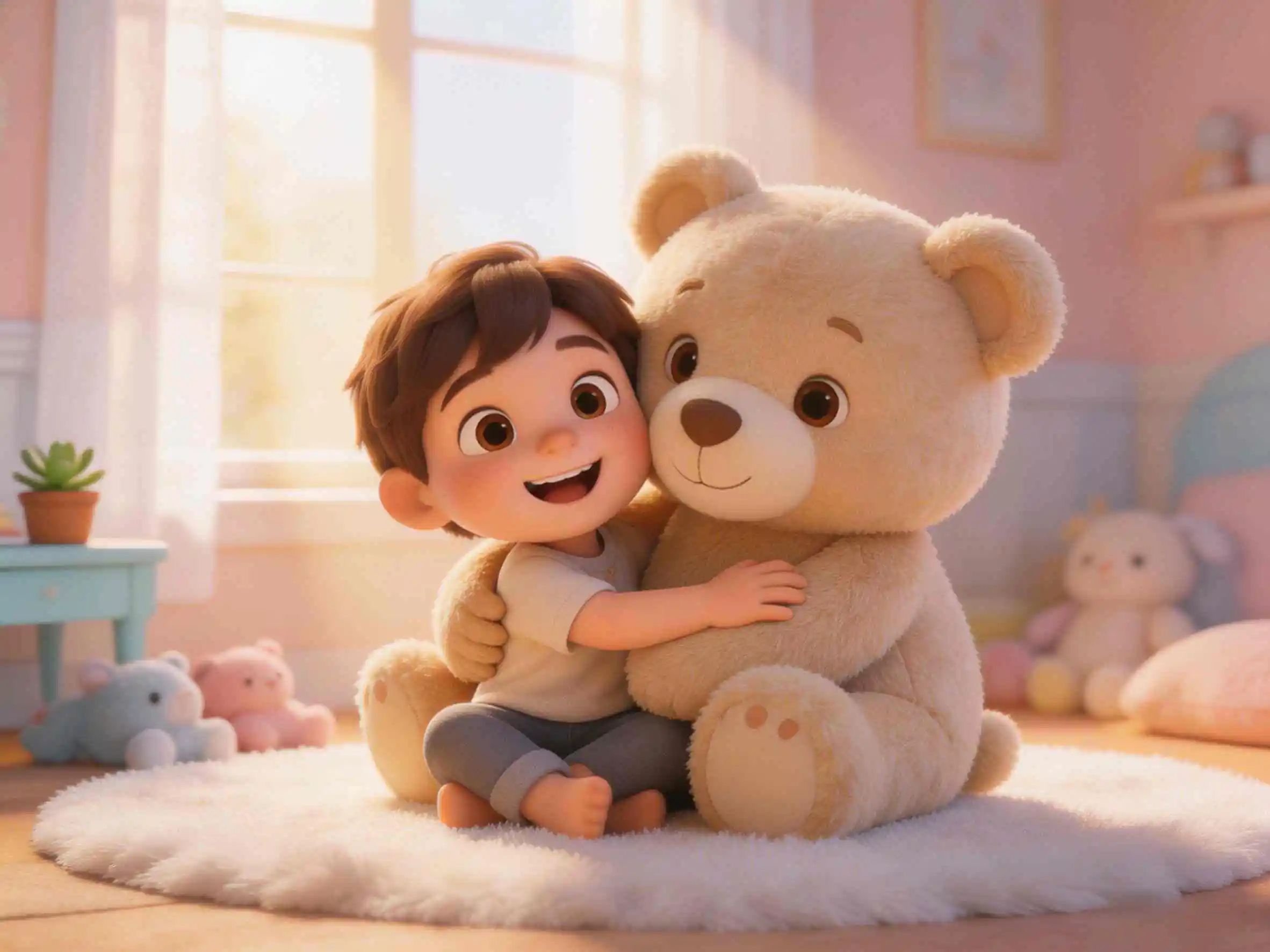
For parents introducing early English vocabulary to their toddlers, finding the right visual balance is a constant struggle. Most mainstream alphabet cartoons and phonics videos are heavily engineered to blast young minds with hyper-active flashing visuals, screeching sound effects, and rapid scene cuts. Instead of helping children absorb vocabulary, this high-stimulation chaos often leads to screen addiction, sensory overload, and post-screen tantrums.
To teach early phonics, foundational English letters, and simple everyday vocabulary smoothly, mindful families are turning to a gentler approach. With KiVi AI, you can bypass chaotic commercial videos and design tailor-made, sensory-friendly English learning cartoons for kids.
The Screen Anxiety Crisis: Why Loud ABC Videos Fail Early Language Learners
Early language acquisition relies on focus, clear audio pronunciation, and calm repetitive observation. Unfortunately, traditional children's media fights for rapid attention spans using flashing graphics and noisy pacing. When a video moves too fast, a child's brain struggles to map the spoken English word to the object on screen. Utilizing specialized low stimulation English videos and gentle sensory-friendly alphabet stories provides an optimized home learning environment:
- Maximizes Vocabulary Absorption: By utilizing a slow-paced, organic visual stream, children aren't distracted by flashing lights. They can focus 100% on connecting the phonics sound (e.g., the letter sound of /æ/) directly to the image (the Apple).
- Encourages Natural Speech Mimicry: Toddlers learn to talk by watching lip movements and hearing distinct, well-spaced speech cues. A calm, non-threatening digital pacing gives young minds the essential time they need to process, repeat, and practice new words comfortably.
How to Make Phonics Stories for Toddlers in 4 Simple Steps
You don't need a background in graphic design or film editing to construct language materials. KiVi AI’s streamlined workspace allows parents to formulate custom vocabulary lessons easily.
Create Your Story & Script
Enter your story idea, then choose your preferred aspect ratio, visual style, and voiceover. AI will instantly generate your script and scene-by-scene storyboards, giving you full freedom to tweak any details.
Select a Low-Stimulation Texture Style
To keep sensory input minimal, select our cozy Claymation or Handcraft art styles. These provide calm, organic textures with gentle camera movements that do not distract the eye.
Apply Soothing, Slow Voiceovers
Pair the scene with KiVi's warm "Soft Mom Voice" or "Sleepy Bedtime Voice" options. The AI structures audio with deliberate spacing and clear phonics pronunciation, optimal for children tracking speech therapy cues.
Render the Full Visual Story
Generate your sequence. KiVi AI maps out your entire narrative block as a continuous multi-scene clip, providing logical flow automatically.
The Character Lock: Maintaining Perfect Visual Consistency
When tailoring custom English learning videos for toddlers, cognitive consistency is everything. Young children introducing themselves to a second language rely deeply on familiar visual patterns. If their digital model changes outfits, facial structures, or expressions between scenes, the child views it as an entirely new stranger, completely breaking the language acquisition focus.
KiVi AI anchors your setup with its flagship Character IP Lock. Once you specify a gentle avatar guide, our rendering engine guarantees that the character retains exact proportions across every storyboard. This allows creators and families to design ongoing low stimulation cartoons for language immersion featuring a trusted companion who guides them through every real-world vocabulary milestone.
- Sensory-Friendly Design: One-click access to organic, soothing Claymation and Handcraft textures.
- Absolute Avatar Consistency: Lock your vocabulary mascot's face safely across infinite scripts.
- Acoustic Comfort: Slow-paced, nurturing narration tracks optimized for language processing.
- Multi-Scene Modeling: Structures continuous behavior chains smoothly with zero harsh scene cuts.
Home Phonics Made Easy: 3 Low-Stimulation Quick Templates
To help families develop targeted digital materials quickly, copy these pre-formatted, low-glare scripts directly into our calm vocabulary cartoons for toddlers generator engine:
-
Scenario 1: A is for Apple & Ant 🍎
The Idea: "A calm animation showing a cute, smiling red apple walking down a beautiful pastel-toned street called Alphabet Lane. The apple meets a tiny little ant on a soft dirt path, waves gently, and says, 'A is for apple. A is for ant!' Muted warm lighting, slow character movements, cozy handcraft style." -
Scenario 2: Nature, Phonics & Helping Hands 🌳
The Idea: "A soothing cartoon featuring three friends: a cute cat, a dog, and a big gentle elephant in a quiet watercolor forest. The cat points to a bird's nest up high and whispers, 'Look, an egg!' The elephant slowly uses its long trunk to lift the egg back safely. Slow pacing, clear character outlines, emphasis on the letter E sound." -
Scenario 3: Winding-Down Vocabulary Picnic 🧺
The Idea: "A low-stimulation cartoon of cute animal friends sitting together on a soft picnic blanket at sunset, sharing an apple pie and a donut. The camera angle is steady and still. The background audio features a very slow, soothing, rhythmic alphabet song as the characters wave goodbye peacefully to wind down for bed."
Frequently Asked Questions
Conclusion: A Gentler Way to Raise a Bilingual Child
Every toddler deserves an early learning journey that feels safe, comforting, and free from digital overwhelm. By marrying simple home language teaching with a smart, sensory-friendly AI animation generator, you can turn screen time into an intentional, nourishing space—helping your child fall in love with English one beautiful, calm word at a time.
Ready to create a beautiful, calm English learning space at home?
Turn your daily alphabet and phonics lessons into comforting, eye-friendly animations today.