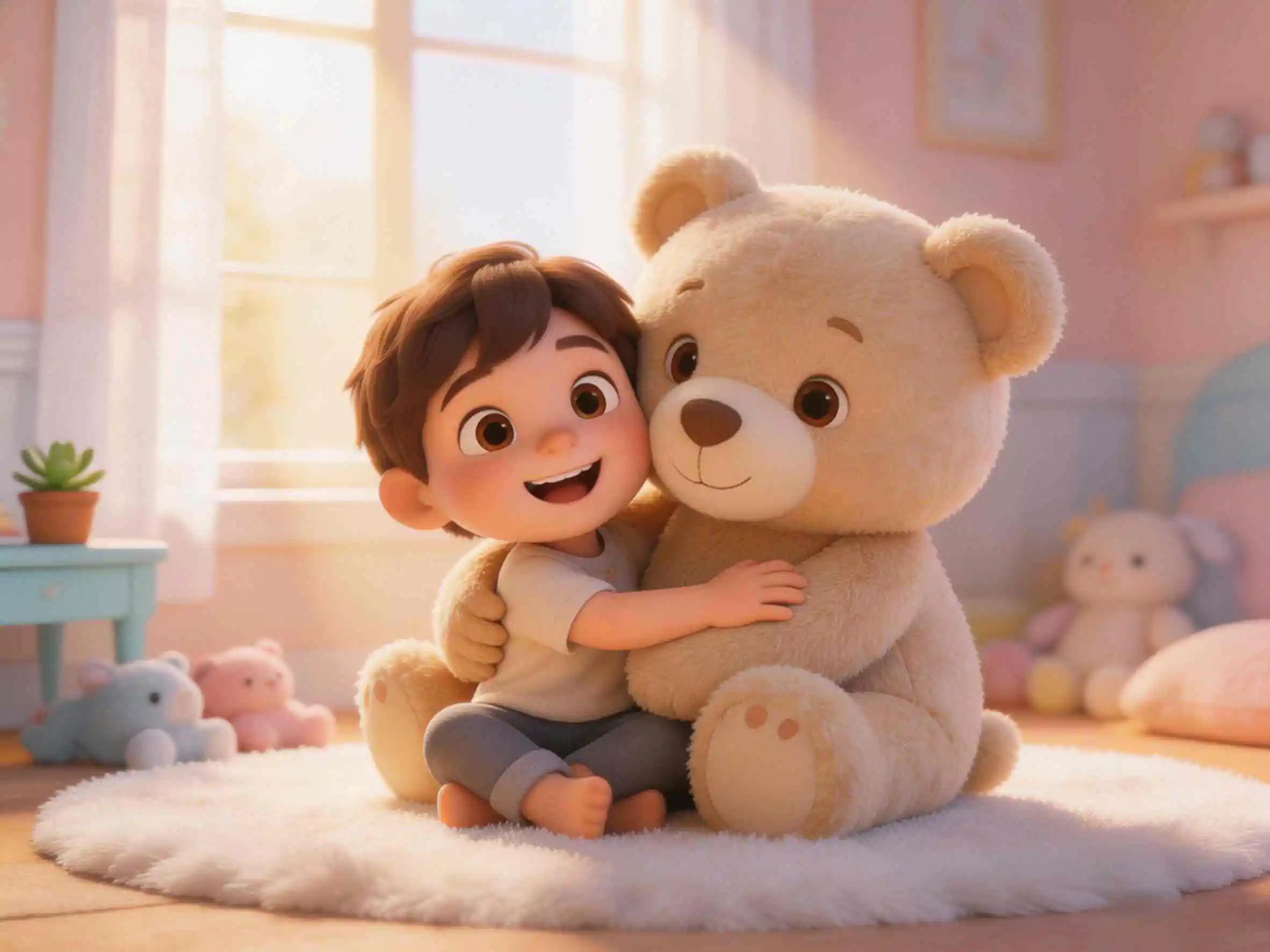
Christmas stories for kids look like bedtime favourites, but they work like ready-made classrooms. Retold well, a Christmas Eve story teaches kindness for kids better than any poster of “be nice” rules, because kindness is not vocabulary — it is a habit, and habits are learned by watching someone make a hard choice in a small moment. A well-graded retelling closes that gap: it wraps notice, ask, give inside a ritual every child already knows, and lets a lovable character model the choice before the child ever has to make one for real. Our latest episode, The Missing Jingle Bell, shows the result — a girl named Lily hunts through the snow for her village's golden bell, finds a robin using it to keep her eggs warm, and hands it back. The tree still lights up, but not the way anyone planned.
KiVi AI turns a graded holiday script straight into synchronized, multi-speaker animation — no voice actors, no manual keyframing, no extra audio editing. From Christmas Eve stories to honesty and sharing tales, one workspace covers the full pipeline: script the moral story, sync natural voiceovers, keep characters consistent across episodes, and publish fast enough to grow a kids' channel.
Why Christmas Cartoons Teach Kindness Better Than Rules
Parents searching for Christmas cartoons for kids are usually looking for two things at once: a story their child already loves, and a lesson that survives past December. For a five-year-old, learning kindness through a story beats memorizing a list of good behaviours. The distance between saying “share” and actually handing over your own scarf in the cold is an emotional distance — and a well-structured kindness story for kids closes it by putting the choice inside a concrete, slightly uncomfortable moment: a bird with cold eggs, a warm metal bell, and a ceremony the whole village is waiting for. Pair expressive cartoon visuals with clear, evenly paced dialogue, and children absorb the behaviour as a habit instead of a slogan to forget by January.
- A familiar ritual, broken on purpose: The episode opens on a promise every child recognizes — “And the jingle bell at the very top will ring, and then all the lights come on.” Ten seconds later, Mayor Bramble announces, “It's gone. The jingle bell is gone!” The loss lands instantly because the ritual was established first.
- Kindness split into three doable moves: Lily notices (“Oh, the poor little thing. She's so cold”), asks for the reason instead of grabbing (“I only borrowed it. They were so cold”), and then gives — the bell back, plus her own scarf. Notice, ask, give: three verbs a child can repeat and act out.
- Cause and effect instead of a warning: Nobody lectures Lily. The consequence is the reward — the robin sings from the top of the tree and the lights come on anyway. “You chose to be kind, and look what happened.”
- Core vocabulary reinforced in action: Key words — missing, borrow, warm, kind, ceremony, jingle — arrive attached to a face, a gesture and a sound, which is how young viewers actually keep them.
That is why Christmas Eve stories survive retelling after retelling: the bones of the holiday are public and familiar, which frees your script to spend every second on the lesson — in this case, kindness and sharing for kids. The same is true of Christmas cartoons: a child who laughs at a snowman's drawl and gasps at a cold nest is not watching decoration, they are watching the moral wear a face.
The plot in one breath: Lily waits all evening for the village tree to light up. When the golden jingle bell that starts the ceremony disappears, the mayor gives up — so Lily takes her lantern and goes looking. A snowman points her toward the old pine wood, an owl confirms a tiny “ting,” and a rabbit couple joins the search. At the nest they find the bell under a robin's eggs, warm because the metal holds heat. Lily leaves it there, wraps her scarf around the nest, and the ceremony is saved by something better than a bell.
What the AI Dialogue Generator Solves: Four Pain Points
Producing a clear, well-paced conversation between animated characters has historically meant coordinating voice talent and spending hours on manual lip-syncing — costs that push most solo creators and small kids' studios out of animated content entirely. This episode puts seven speaking characters on screen: Lily, her mother, Mayor Bramble, Flurry the snowman, Hoot the owl, Pip the rabbit, and a robin who answers in song. With KiVi AI's dialogue generator, a graded Christmas cartoon script becomes a finished animated episode without leaving the browser. Here is what actually changes:
- Pain point 1 — voice production cost: A separate, clearly different voice is generated per character — Lily's bright, breathless urgency, her mother's warm steadiness, Mayor Bramble's low formal rumble, Flurry's slow friendly drawl, Hoot's sleepy hoot, Pip's quick helpfulness — with automatic phoneme-accurate lip sync, so children get correct pronunciation cues without any post-production alignment work.
- Pain point 2 — pacing that ignores young viewers: You paste the Christmas Eve story script directly, or refine the rhythm turn by turn, keeping the pauses children need to answer a question out loud — “Have you seen a golden bell?” only works if the silence after it is long enough for a child to shout back.
- Pain point 3 — character drift across scenes: Character IP Lock keeps Lily's red pompom hat, white scarf and brass buttons identical as she moves from the window to the square, down the lane, into the pine wood and back under the tree — the consistency problem that traditionally required frame-by-frame redraws, and the key to a recognizable series.
- Pain point 4 — one style for every audience: Render the same script as tactile claymation stop-motion or vibrant 3D Wisetoon (browse the animation styles gallery), so one Christmas story can serve toddlers, ESL classrooms and family viewers without a rebuild.
Turning a Christmas Eve Story into a Kindness Script (Template)
A kindness story for kids only works if the lines are right. Before generating anything, lock one thinking behaviour per scene and keep every turn under about twelve words — short enough for a readable subtitle and for a child to echo out loud. This is the pattern The Missing Jingle Bell follows, beat by beat:
| Story beat | Line to lock in | Where it lands in the scene |
|---|---|---|
| The ritual, promised (the setup) | “And the jingle bell at the very top will ring, and then all the lights come on.” | Lily at the frosted window, her mother buttoning her coat behind her |
| The problem lands | “It's gone. The jingle bell is gone!” | The square, Mayor Bramble holding his hat against his chest |
| The decision to act | “Nobody should be sad on Christmas Eve.” | Lily with the lantern, her mother's hand on her shoulder |
| The search (three helpers) | “Have you seen a golden bell? A little round one that jingles?” | Snowman, then owl, then rabbit couple, each one passing her along |
| The discovery — and the reason | “She's been using it to keep her nest warm. The metal holds the heat.” | Under the old pine, lantern light on a nest of eggs |
| The choice (the lesson lands) | “Her babies matter more than a ceremony. We'll find another way.” | Lily's mittened hand letting go of the bell, then her scarf unwinding |
| The payoff | “Her song, it rings just like the bell.” | Robin on the treetop, lights rippling up the branches |
Two production rules follow from the script. First, give each character a voice a child could identify with their eyes closed — Lily and her mother must never blur together. Second, plant the ritual promise early enough that the payoff at the treetop feels earned; the line about the bell ringing is repeated four times across the episode (as promise, as loss, as discovery, as substitute), and every repetition costs nothing at script stage but is expensive to retrofit after animation.
How to Make a Christmas Kids' Video in KiVi AI
Turning that Christmas Eve story script into a publish-ready kids' AI 3D cartoon takes four steps, all inside the KIVI AI workspace:
Step 1: Create Your Story
Start with the logline — for example, “A girl in a snowy village searches for the golden bell that lights the Christmas tree, and finds a robin using it to keep her eggs warm.” Choose Narration or Character Dialogue, then set the video parameters: aspect ratio, language and visual style.
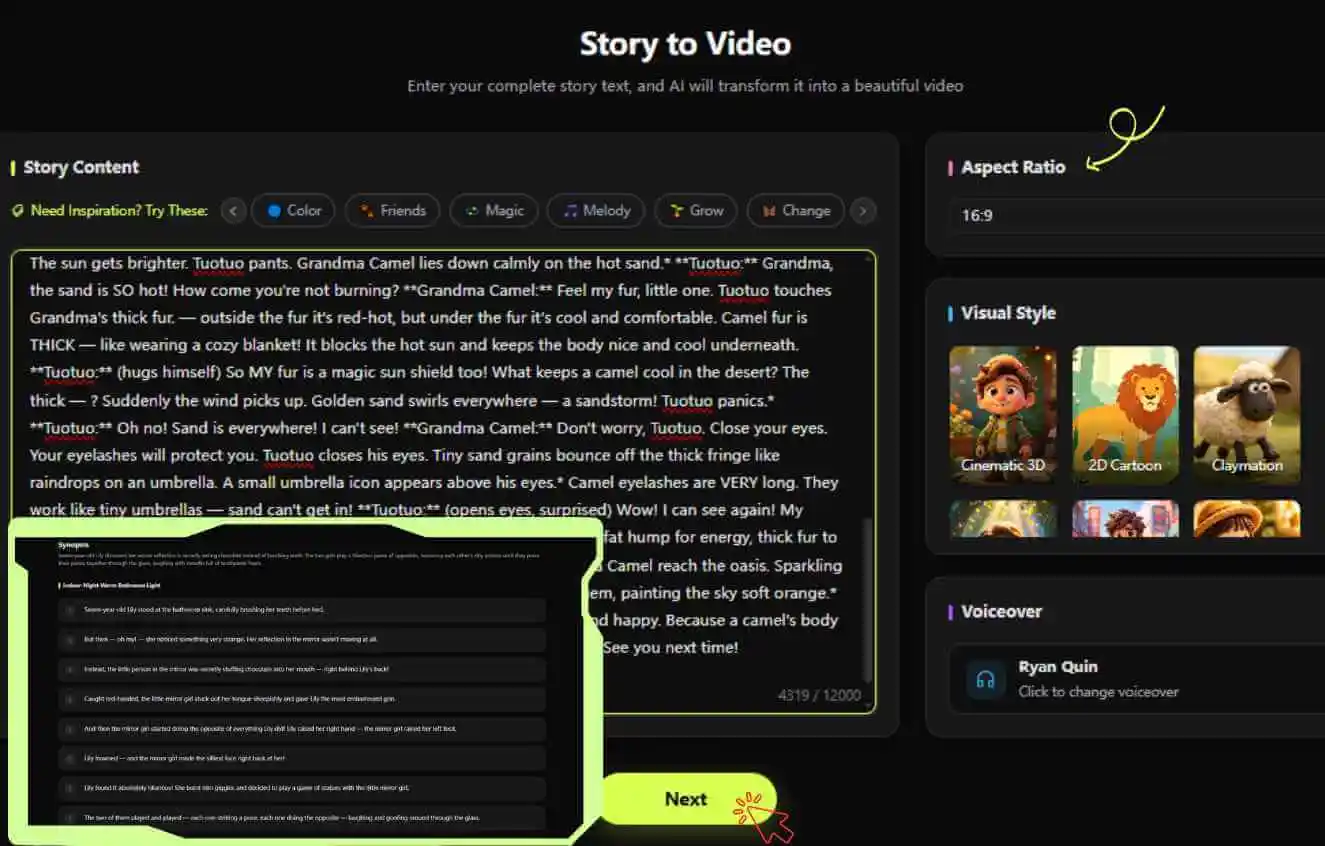
Step 2: Develop the Story & Dialogue Script
Let AI draft the outline in Narration mode, or produce an editable script in Character Dialogue mode. Rewrite the lines here — vocabulary level, the repeated ritual promise, pause points before every question — before anything is rendered.
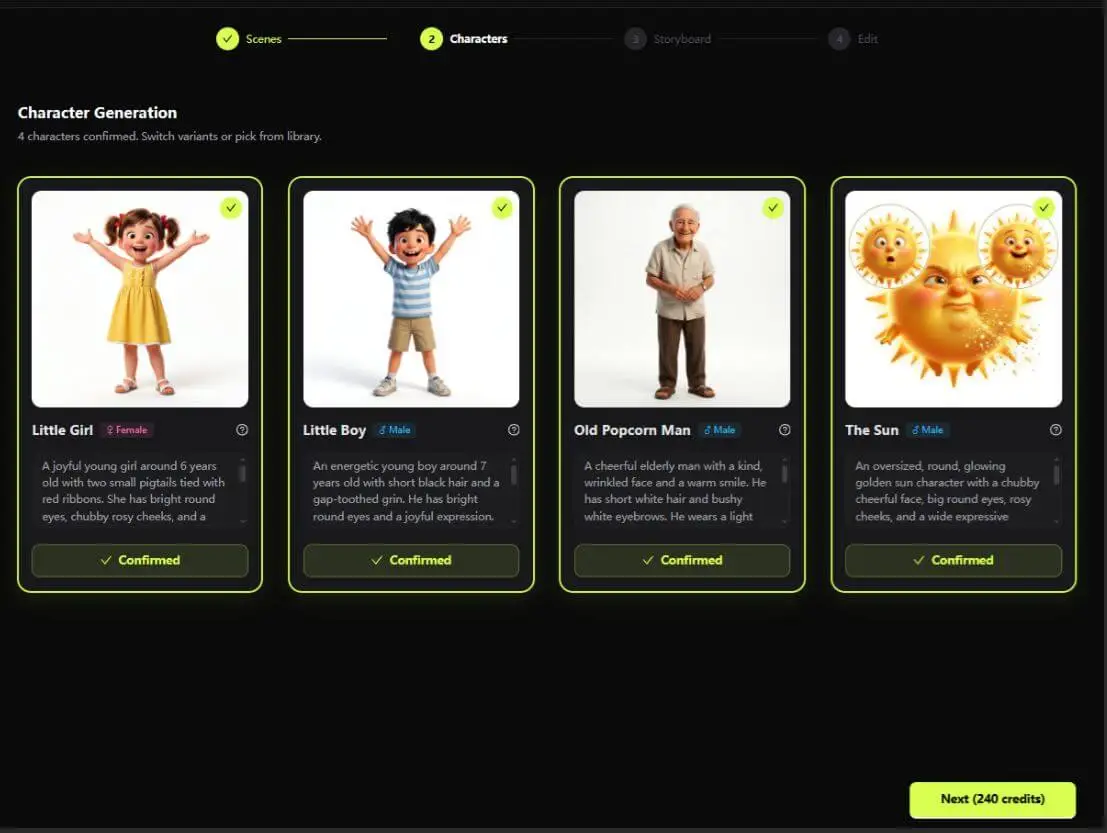
Step 3: Design Characters & Build Storyboards
Pick the AI-generated designs for Lily, Mayor Bramble, Flurry, Hoot, Pip and the robin, assign a distinct voice to each, and turn the script into storyboards. Adjust scene prompts and lines while the character models stay locked — Lily's red pompom hat stays red in every episode.
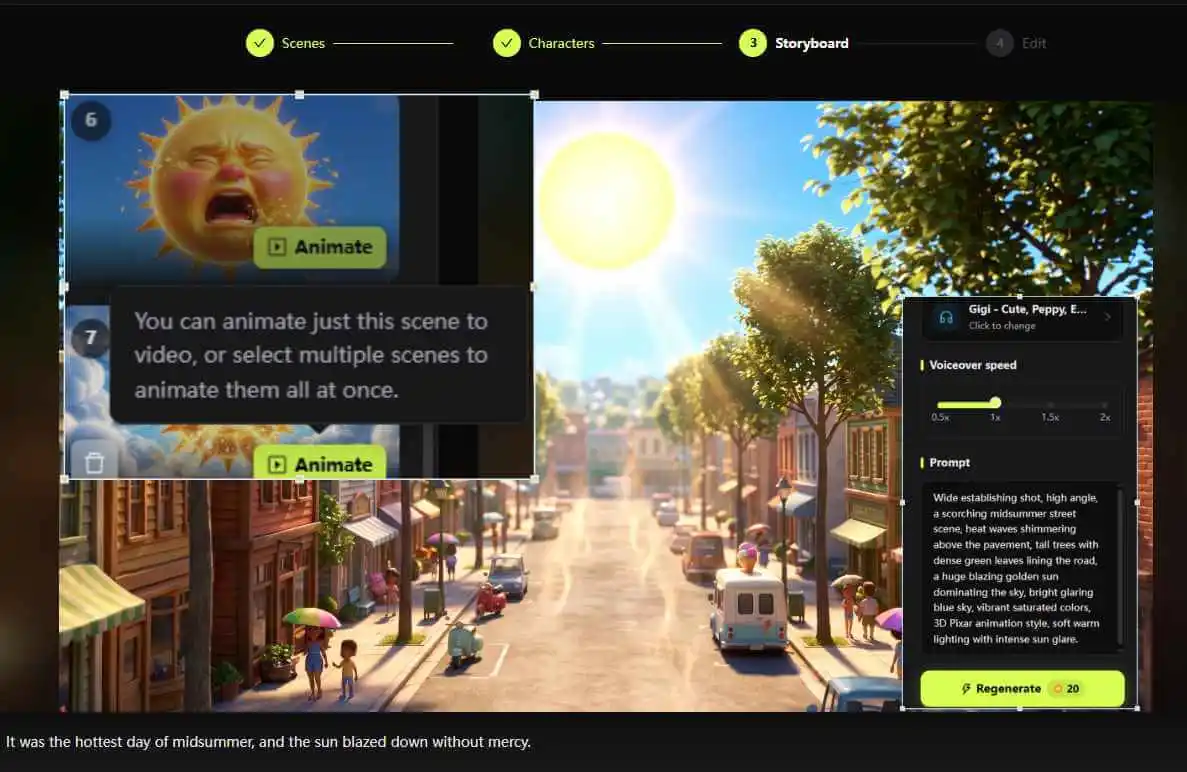
Step 4: Animate, Caption & Export
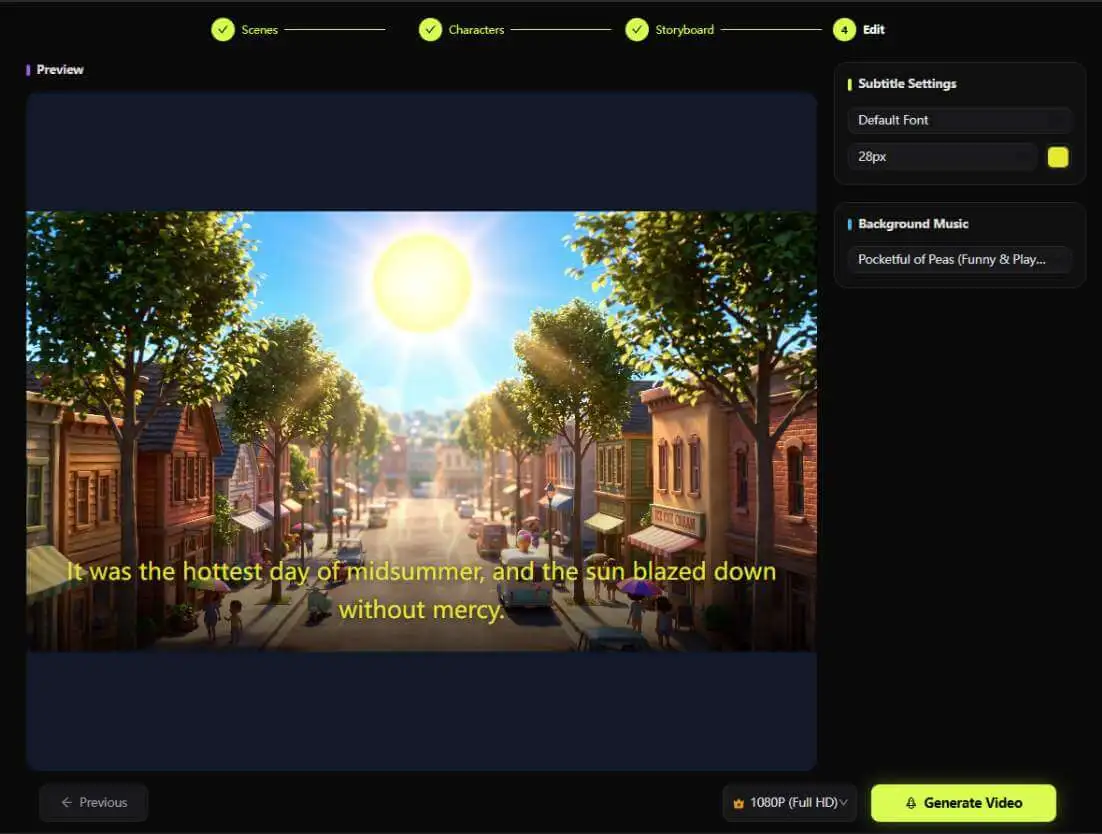
Animate the shots you keep, add subtitles and a music-box score that ducks under dialogue, review the lip sync on the search questions (“Have you seen a golden bell?”), then export in 16:9 for YouTube or 1:1 for classroom screens.
AI Dialogue Generator vs. Traditional Kids' Animation Production
A traditional animated retelling of a Christmas story coordinates voice talent, illustrators and video editors — and every script revision restarts part of that chain. A story-to-video workflow collapses it into a single editing surface:
| Production category | Traditional kids' animation workflow | KiVi AI dialogue generator |
|---|---|---|
| Voiceover & pronunciation | Hire several voice actors, then align mouth shapes to the audio tracks by hand. | Generates a clear, distinct voice per character with automatic phoneme-accurate lip sync. |
| Character continuity | Redrawing Lily's coat and hat against every new snowy background is slow and costly. | Character IP Lock holds Lily's exact appearance across every scene cut and every episode. |
| Script-level changes | Rewording one line of dialogue means re-recording audio and re-cutting the scene. | Edit any sentence in the browser and regenerate that scene within seconds. |
| Publishing frequency | A single five-minute animated Christmas story takes weeks to finish. | Multiple episodes can ship every week from the same series template. |
Building a Christmas Kids' Channel Around One Village
Children follow recurring characters through familiar situations — which is why a single snowy village outperforms a pile of unrelated holiday clips on retention. Pairing a structured library of Christmas stories for kids with an automated character dialogue animation pipeline makes a sustainable kids' channel realistic for a one or two person team:
- Build one village, one virtue per episode: Follow Snowberry Village from The Missing Jingle Bell into a New Year's episode about waiting your turn, a snow-day episode about telling the truth, and a spring episode about saying sorry — one thinking habit per story, one repeatable ritual per episode.
- Design for echo practice: Keep the ritual promise clean and evenly paced so young viewers can pause and finish it out loud — “and then all the lights come on.” That repetition, not the moral, is what children carry out of the room.
- Keep visual branding consistent: Reuse the same character models, thumbnail layout and end-screen “goodnight” card so families recognize the series before they read the title — and so every new episode costs a fraction of the first.
The compounding effect is the point: episode ten costs a fraction of episode one, because the cast, the style and the story skeleton already exist. Holiday folklore is public domain in its bones, so the only asset you ever need to build from scratch is the audience.
Frequently Asked Questions
Conclusion: Start With One Christmas Eve Story
Stories like The Missing Jingle Bell show what a well-designed kindness story for kids can do: a ritual promised, a ritual lost, and a hero who decides that someone else's cold eggs matter more than her village's ceremony. That single decision turns a Christmas Eve story into something children ask to rewatch — and something they can retell to you, line by line, a week later. What used to require a production team now takes an afternoon.
Whether you are growing a kids' YouTube channel, turning Christmas stories for kids into classroom material, or building a recurring holiday series around one snowy village, KiVi AI keeps the work on storytelling instead of production overhead. Script your next Christmas story, generate the character dialogue animation, and publish it this week.
Ready to tell a Christmas story for kids?
Turn one small act of kindness into a multi-character cartoon episode — voices, lip sync and lights included.